Here is a small secret about sleep: sometimes the best thing you can do for tonight happens first thing tomorrow morning. It has nothing to do with pillows or tea, and everything to do with stepping outside and looking at the sky.
Your body runs on an inner clock that loves rhythm, and light is its favourite signal. Let’s look at how that works in plain English, and how to use it in a way that fits a busy life.
Your inner clock, in a nutshell
Every person has a built-in daily rhythm, often called the body clock or circadian rhythm. It nudges you to feel alert at some times and sleepy at others. It is not perfectly tuned by itself, so it takes cues from the world around you. The strongest cue is light.
Bright daylight in the morning tells your body, “The day has started.” That helps you feel more awake now, and it also helps you feel sleepy at a more sensible time in the evening. A steady signal, day after day, makes the whole rhythm easier to follow.
Why morning light is special
Light at any time of day affects your clock, but morning light is the one that helps anchor it. Even on a cloudy day, the light outdoors is much brighter than the light inside your home. That difference matters more than you might think.
You do not need a perfect sunrise or a long hike. A little time outdoors early in the day is enough to make a start.
How to get your morning light in 10 minutes
Here is an easy plan that you can try tomorrow. It takes only about 10 minutes, and you can adapt it to your home.
- Get up and open the curtains right away. Let daylight into the room before you reach for your phone.
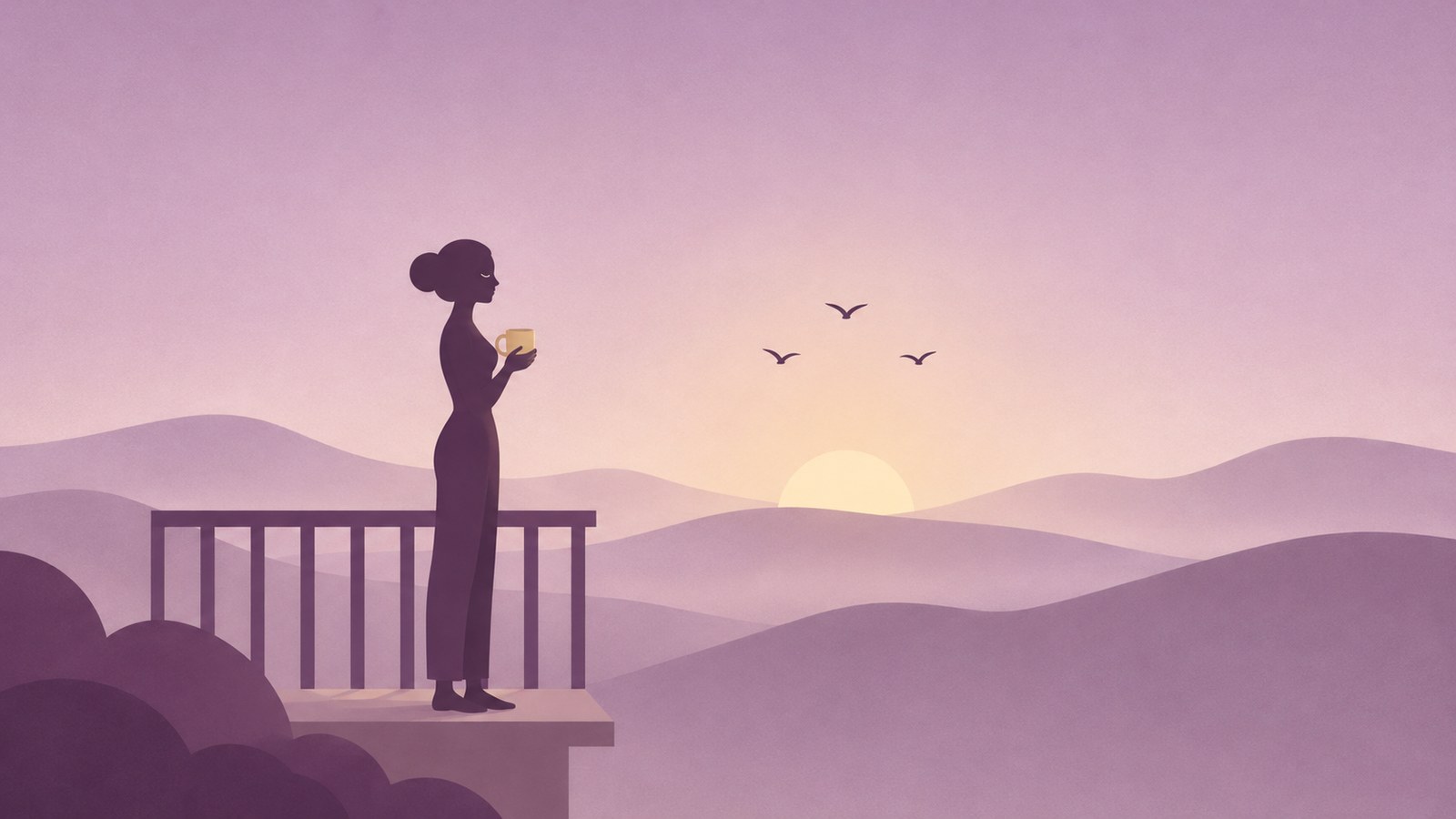
- Step outside. A balcony, a doorstep, a garden or a short walk around the block all count.
- Bring your morning drink. Tea or coffee tastes better in fresh air, and it gives you a reason to stay a few minutes.
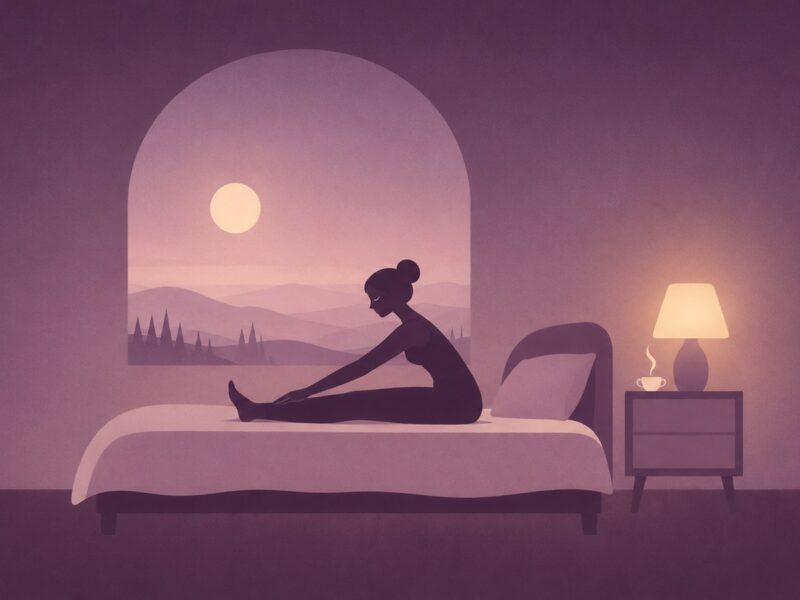
- Breathe and stretch. Reach your arms overhead, roll your shoulders and take 5 slow breaths.
- Look at the sky, not at a screen. Let your eyes rest on something far away, like the horizon or trees.
Please do not stare straight at the sun. Simply being in outdoor daylight is enough.
Tip: pair your light time with something you already do every morning, like making tea, so it becomes automatic.
If your mornings are dark or you work early
Winter mornings and early starts can make this tricky. Do not worry, you have options.
- Sit by the brightest window you have while you have breakfast.
- Take a short walk at lunchtime, when daylight is strongest.
- Turn on bright lights in the morning and keep them dim in the evening, so the contrast is clear.
- If you work on night shifts or have complex sleep problems, speak to a professional about what suits you.
Pair it with an evening wind-down
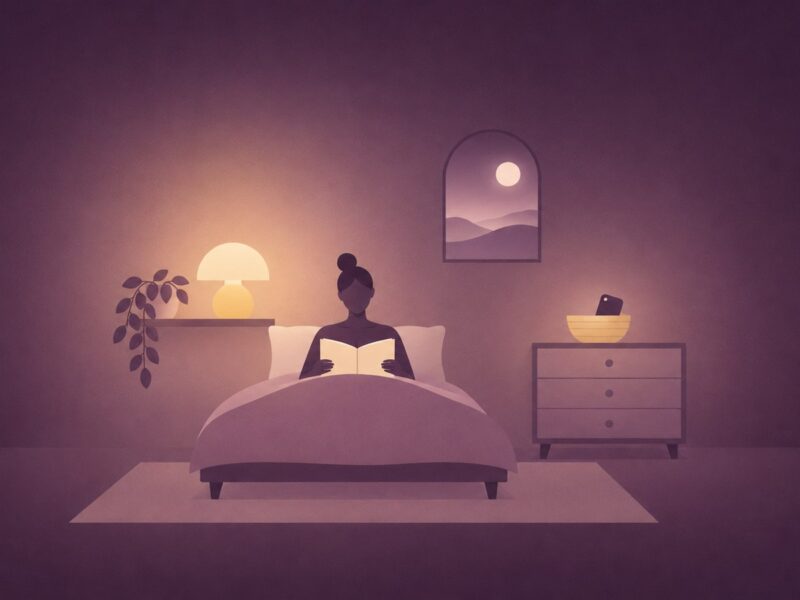
The other half of the story is the evening. As the day ends, lower the lights and slow things down, so your body sees a clear difference between day and night. Bright mornings and softer evenings work together, like the two sides of a seesaw.
Give it a couple of weeks before you judge the results, since rhythms change slowly. Many people notice that waking up feels a little easier, and that evening sleepiness comes more naturally.
Keep a steady rhythm
Light works best when your days follow a steady pattern. Try waking up at around the same time each day, even at weekends, within an hour or so. It is a gentle way of telling your body clock what to expect.
If you stay up late one night, do not fret. Get your morning light as usual and carry on with your day. Your rhythm is flexible and forgiving, and it responds well to small, regular nudges rather than strict rules.
Many people also find that morning light lifts their mood a little. A few minutes of fresh air, a view and a slow breath can turn a rushed start into something calmer, which is a lovely side effect for such a simple habit.
A gentle start to the day
Morning light is free, simple and kind. It asks only that you step outside for a few moments, and in return it may give you a steadier day and a calmer night.
If you would like to start your mornings with some mindful movement too, check out our weekly schedule for a morning class, and bring your mug along.