Children are natural movers. They climb, roll, hop and stretch without anyone telling them how. That makes yoga with kids less about teaching and more about playing together. If you can be a little silly, you already have everything you need.
Here is a gentle guide to family yoga that works in a small living room, for a few minutes at a time.
Keep it playful, not perfect
Forget about correct alignment. The goal is shared time, laughter and a few calm breaths. Kids will wobble, giggle and change their minds, and that is how it should be. Short sessions of five to ten minutes are often better than long ones.
Let your child choose the poses sometimes. When they feel they are leading, they usually join in more happily.
Set the scene
- Roll out two mats or a soft rug side by side.
- Turn off the television and put your phones away.
- Pick a theme, such as the zoo, the forest or the sea.
- Choose a bit of calm music if you like.
Animal poses to try
Tree
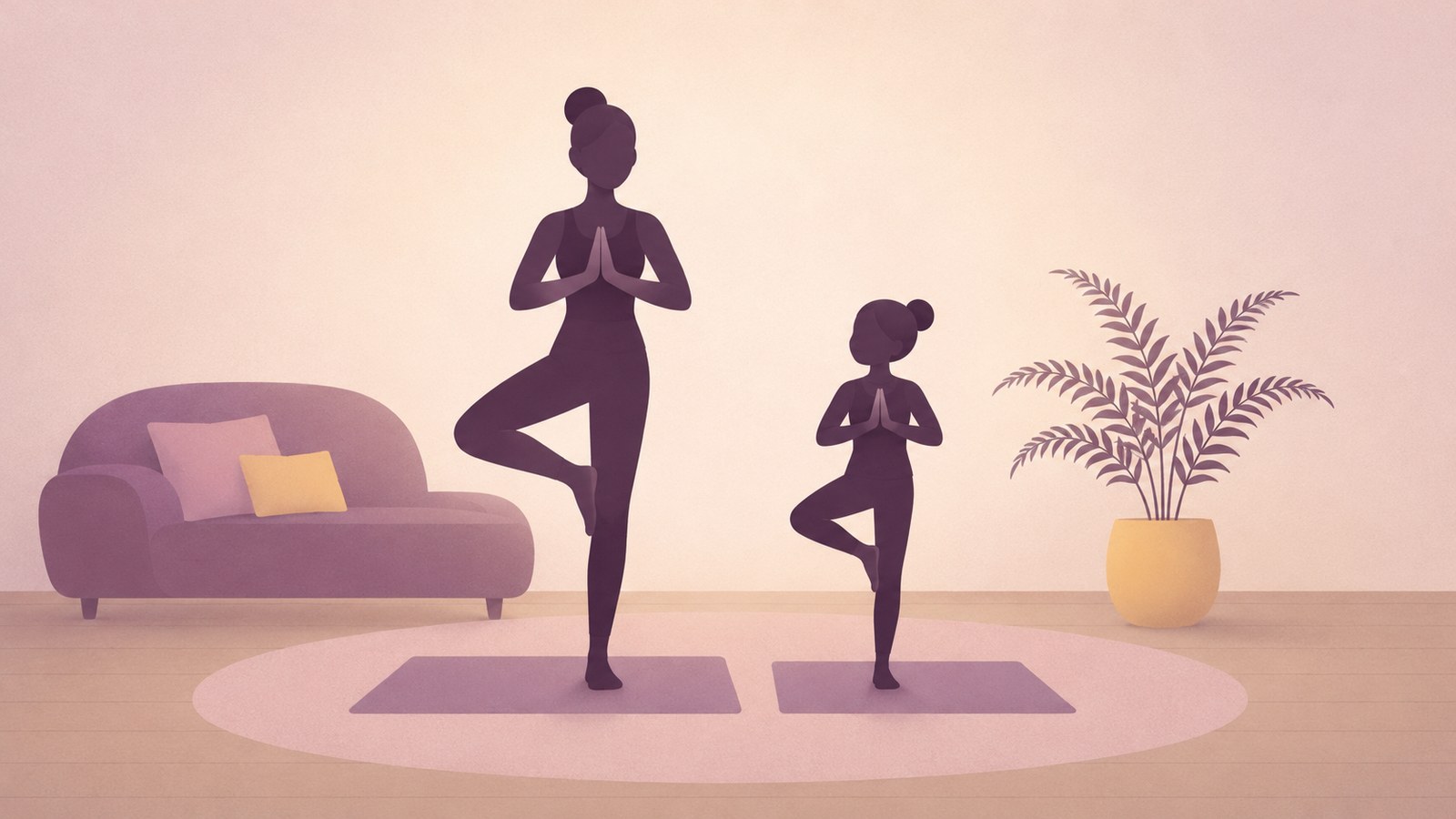
Stand tall and place one foot against the opposite calf or ankle, never the knee. Lift your arms like branches. Wobbling is part of the game, so ask: what happens when the wind blows? Then sway together and laugh.
Cat and cow
On hands and knees, arch your back like an angry cat, then drop your belly like a sleepy cow. Add the sounds. Meowing and mooing are encouraged.
Downward dog
Lift your hips high and let your tail wag. Ask your child to bark. This one often turns into a game of chase, which is wonderful too.
Butterfly
Sit with the soles of your feet together and flap your knees gently like wings. Slow the flapping down until the butterfly lands on a flower.
Snake
Lie on your tummy, place your hands under your shoulders and lift your chest softly while hissing out a long breath. Keep it small and comfortable.
Partner poses
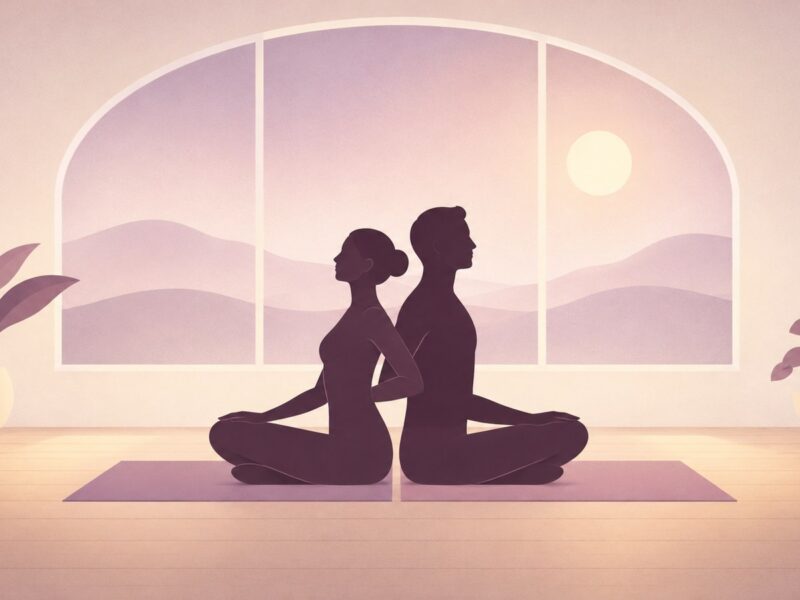
Some poses are even more fun in pairs. Sit back to back and feel each other breathe, or sit facing each other with feet touching and pass an imaginary ball. If you enjoy these, you may like our post about moving together with a partner, since many ideas work across ages.
Tip: let your child be the teacher for a few minutes. Ask them to show you their favourite pose, then copy it exactly.
Add a little story
Stories make every pose more interesting. Imagine you are walking through a jungle: stretch tall like a giraffe to reach the leaves, crouch low like a frog beside the pond, then spread your arms like an eagle and glide home. Let your child invent the next part of the adventure, and follow wherever it leads. Even reluctant movers tend to join in when there is a plot, and you may be surprised at how long the game lasts.
A calming finish
End with something quiet, especially before bedtime. Here are three easy options:
- Belly breathing with a teddy: lie down, place a soft toy on your tummy and watch it rise and fall like a boat.
- Smell the flower, blow the candle: breathe in through your nose, and blow out slowly through your mouth. Repeat five times.
- Star rest: lie on your back with arms and legs spread wide, eyes closed, for one minute of stillness.
Tips for different ages
Toddlers will mostly copy and wander off, and that is fine. Primary-school children love stories and challenges, such as holding a pose while you count to five. Teenagers might prefer a short, quiet stretch with music they choose. Meet each child where they are, and keep the mood light.
Make sure the floor is clear and non-slip, and never push a child into a stretch. If anyone complains of pain, stop. If you have any worries about your child’s health or movement, check in with a professional.
Make it a little ritual
Pick a regular time, such as Saturday morning or after dinner on Wednesdays, and let it become part of family life. Children enjoy predictable rituals, and you get a few moments to breathe and reconnect. Even a single shared pose and one long breath before school or after bath time counts, so do not worry if a full session never happens.
When you would like some time to practise on your own, too, you can peek at the weekly schedule and find a gentle live class that suits you. A calm grown-up often makes for a calmer family yoga session.