Picture the yoga photos you have seen online: someone balancing on one hand above a sunset beach. Now forget them. Real yoga for beginners looks much more ordinary, and much more kind. It looks like a person standing on a mat, breathing, and noticing how their body feels.
These five poses are the ones I teach in the first weeks of my classes. None of them needs flexibility or special kit. All you need is a bit of floor space, comfortable clothes and about ten minutes.
How to approach your first practice
Go slowly and breathe through your nose if you can. Stay in each pose for five slow breaths, then move on. You should feel a mild stretch or a bit of effort, never sharp pain. Moving less than you think you should is a perfectly good plan.
1. Mountain pose
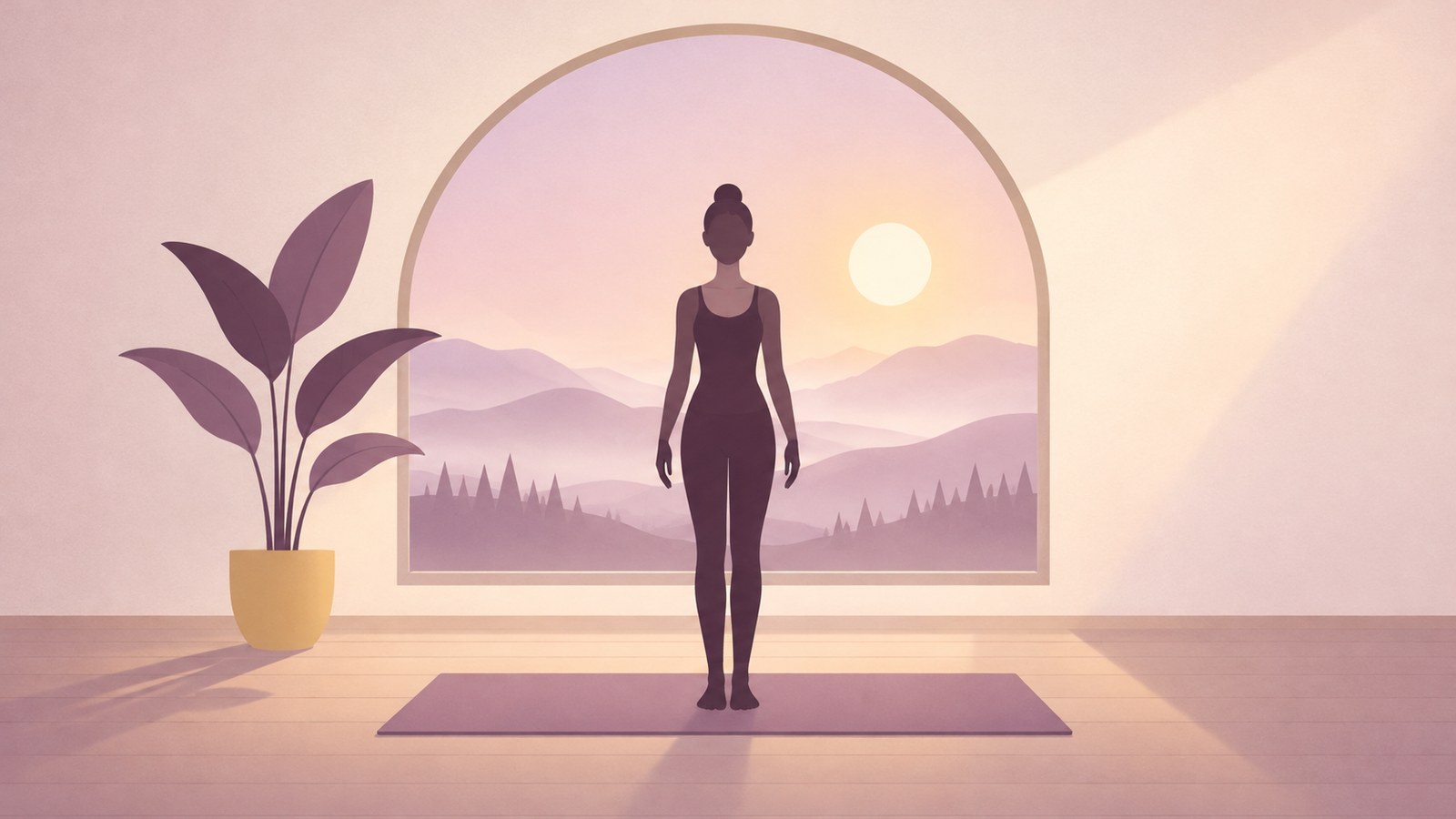
It looks like standing, and that is exactly the point. Stand with your feet hip-width apart and your weight spread evenly through both feet. Let your arms hang by your sides, lengthen the back of your neck and soften your shoulders away from your ears.
- Imagine a string gently lifting the crown of your head.
- Keep your knees soft, not locked.
- Take five slow breaths and feel your feet on the floor.
2. Cat-cow
Come onto your hands and knees, with hands under your shoulders and knees under your hips. As you breathe in, let your belly drop and lift your chest. As you breathe out, round your back towards the ceiling. Repeat eight to ten times, moving at the pace of your breath.
If your wrists feel tender, make loose fists or rest on your forearms. A folded blanket under your knees helps too.
3. Child’s pose
From all fours, sit your hips back towards your heels and rest your forehead on the mat or a cushion. Let your arms reach forward or lie beside your legs, whichever feels better. This is your resting pose, so you can return to it any time during practice.
Spread your knees wide if your belly feels squashed, and place a pillow between your hips and heels if they do not quite reach.
4. Downward-facing dog
This one looks famous but works well when you keep it simple. From hands and knees, tuck your toes and lift your hips up and back, forming an upside-down V. Bend your knees as much as you like. Your heels do not need to touch the floor, and they usually will not at first.
- Spread your fingers wide and press into your whole hand.
- Let your head hang between your arms.
- Pedal your feet gently, bending one knee and then the other.
- Stay for three to five breaths, then lower to your knees.
5. Easy seated twist
Sit cross-legged on the floor or on a folded blanket. Place your left hand on your right knee and your right hand behind you. Breathe in to sit tall, and breathe out to turn gently to the right, starting from your belly rather than your neck. Hold for five breaths, then switch sides.
Sitting on a chair works just as well. Turn towards the back of the chair and hold it lightly with both hands.
Tip: if you only have time for one pose, choose child’s pose. A few slow breaths there are a lovely reset in the middle of a busy day.
Putting it together
Try the five poses in order, spending about two minutes on each. That is a complete little practice. Do it three times in your first week, ideally at a time you can link to something else, like right after your morning coffee or before you shower.
Some common beginner worries are worth saying out loud. You do not need to touch your toes. Your poses will not look like anyone else’s. Wobbling means you are learning, not failing. Many people feel awkward for the first few sessions, and then one day it simply feels good.
If you enjoy these, our ten-minute morning stretch is a nice next step. And if something hurts, stop and check in with a professional, particularly if you have an injury or a health condition.
Going further, gently
After a couple of weeks, notice what has changed. Maybe you remember the poses without peeking. Maybe your shoulders drop a little more easily. Small signs like these are the real progress. There is no finish line in yoga, only a growing habit of paying kind attention to yourself.
When you would like a friendly voice guiding you through it, your first live class is free, and Sandra will happily walk you through every pose, one breath at a time.