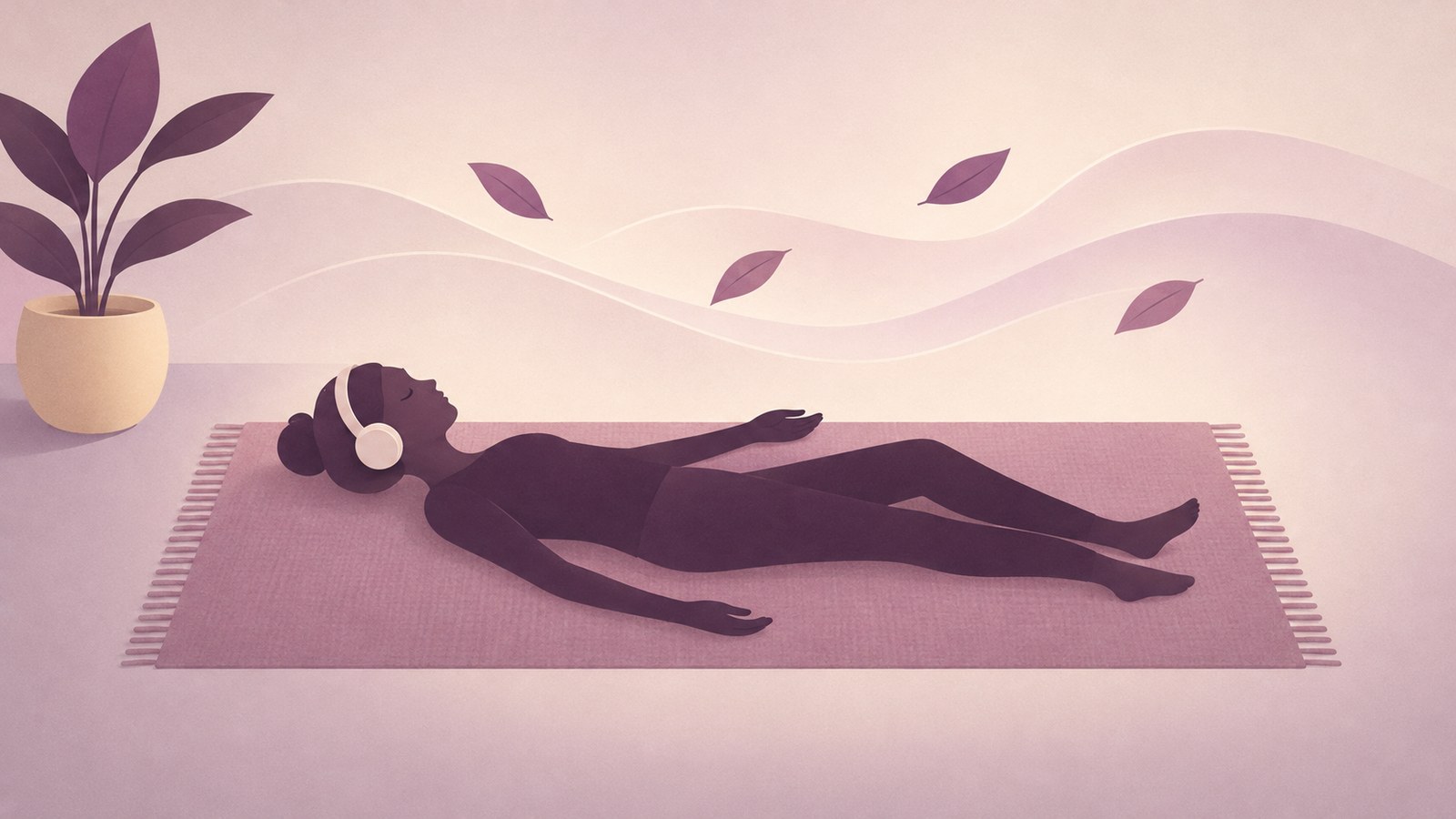
Think of a song that instantly makes you feel at home, or the sound of rain on a window when you are tucked up warm. Sound reaches us quickly, and often it changes how we feel before we have even thought about it.
The nice thing is that you do not need any training to use this. With a little attention and a few simple choices, listening can become one of your easiest ways to unwind.
Listening is a skill you can practise
Most of the time we hear without really listening: music in the background, traffic, the dishwasher. Mindful listening simply means choosing to pay attention to sound for a short while, the way you might look carefully at a view.
It is a lovely practice for people who find silent meditation difficult, because the sounds give your attention something to rest on.
A five-minute listening practice
- Get comfortable. Sit or lie down somewhere you will not be disturbed. Dim the lights if you like.
- Choose your sound. It could be a favourite instrumental piece, a nature recording, or just the sounds of your home.
- Close your eyes and let your breathing find its own rhythm.
- Follow one thread. With music, choose one instrument and follow it. With room sounds, notice one near sound, then one far away.
- Return when you wander. If you start planning dinner, smile and gently come back to the sound.
- Finish slowly. When the time is up, take a deep breath, wiggle your fingers and open your eyes.
Notice how your body feels afterwards. Often the shoulders are looser and the breath a little slower.
Build your own “calm playlist”
Everyone relaxes to different things, so there is no single right choice. Here are a few styles to experiment with:
- Slow, gentle instrumentals. Piano, guitar or soft strings without lyrics tend to be easy to relax into.
- Nature sounds. Rain, ocean waves, a woodland morning or a flowing stream.
- Soft, steady background noise. Some people like a quiet, even hum that covers distracting sounds.
- Your own favourites. If a song from years ago always settles you, it belongs on the list.
Save your picks in one playlist and give it a friendly name, like “Slow down”. Having it ready means you will not waste your calm minutes searching.
Tip: keep the volume low. Calm listening should feel like being wrapped in a soft blanket, not being pushed by the sound.
Little moments to add sound
- While making tea or dinner: put on something quiet and give it half your attention.
- On the commute: swap the news for a calmer track for part of the journey.
- Before bed: choose something soft and consistent, and set a timer so it fades out.
- During stretching or yoga at home: gentle music can help you stay with your breath.
Silence counts too
Sometimes the most restful choice is no sound at all. If you are surrounded by noise all day, a few minutes with the music off might be exactly what you need. Try listening to the quiet and noticing the small sounds that live inside it: the hum of the fridge, a distant bird, your own breathing.
If you are very sensitive to sounds, or if certain music brings up strong feelings, go gently and switch it off whenever you like. There are no rules, only what feels kind to you.
For more ways to ease into the end of the day, our evening wind-down routine has ideas you can pair with your playlist.
Listen first, then decide
Try one listening session this week, even a short one, and see how you feel. Then keep what helps and let the rest go.
Sing, hum or tap
Listening is not the only way in. Humming along to a tune, singing quietly in the shower, or tapping a slow rhythm on your knee can all be soothing. Humming in particular makes your out-breath a little longer, which many people find settling.
You do not have to sound good. Nobody is grading you, and the point is simply to enjoy the vibration of your own voice and let your breath move more slowly than it usually does.
If you want to see how music, breath and movement can blend together in a gentle way, your first live class is free. Come curious and bring your ears.