By 3 pm, many of us are running on fumes. The inbox keeps refilling, the meetings blur together, and we realise we have not stood up, looked away from the screen, or taken a proper breath in hours.
You do not need to add a long meditation to a packed schedule. What helps most is a handful of tiny pauses, thirty seconds here and two minutes there, spread through the day. Think of them as little reset buttons.
Why short pauses work
Long stretches of focus tend to leave us tense without noticing: jaw clenched, shoulders hunched, breath shallow. A brief pause interrupts that autopilot. It does not fix everything, but it gives your body and mind a chance to loosen up before the next task.
The trick is to make these moments so small and so easy that you actually do them.
The arrival pause
Before you open your laptop, sit for a moment. Put both feet on the floor and take three slow breaths. Ask yourself one question: “What matters most today?” Choose one or two things, not ten.
This takes under a minute, and it helps you start by choosing rather than reacting.
The mindful sip
Coffee and tea are perfect reminders because you are already doing them. Once a day, drink one cup with your full attention. Notice the warmth in your hands, the smell, the first taste. Put your phone down and look out of the window.
It might be the only two minutes in your day when you do one thing at a time, and that alone can feel surprisingly restful.
The desk reset
Every hour or so, try this quick sequence at your chair:
- Roll your shoulders back five times.
- Gently tilt your ear toward each shoulder and breathe for two slow breaths on each side.
- Interlace your fingers, turn your palms away and reach your arms forward, rounding your upper back.
- Sit tall and take one long exhale through your mouth.
It takes about a minute. Move gently, and if anything feels painful, stop and check in with a professional.
The window pause
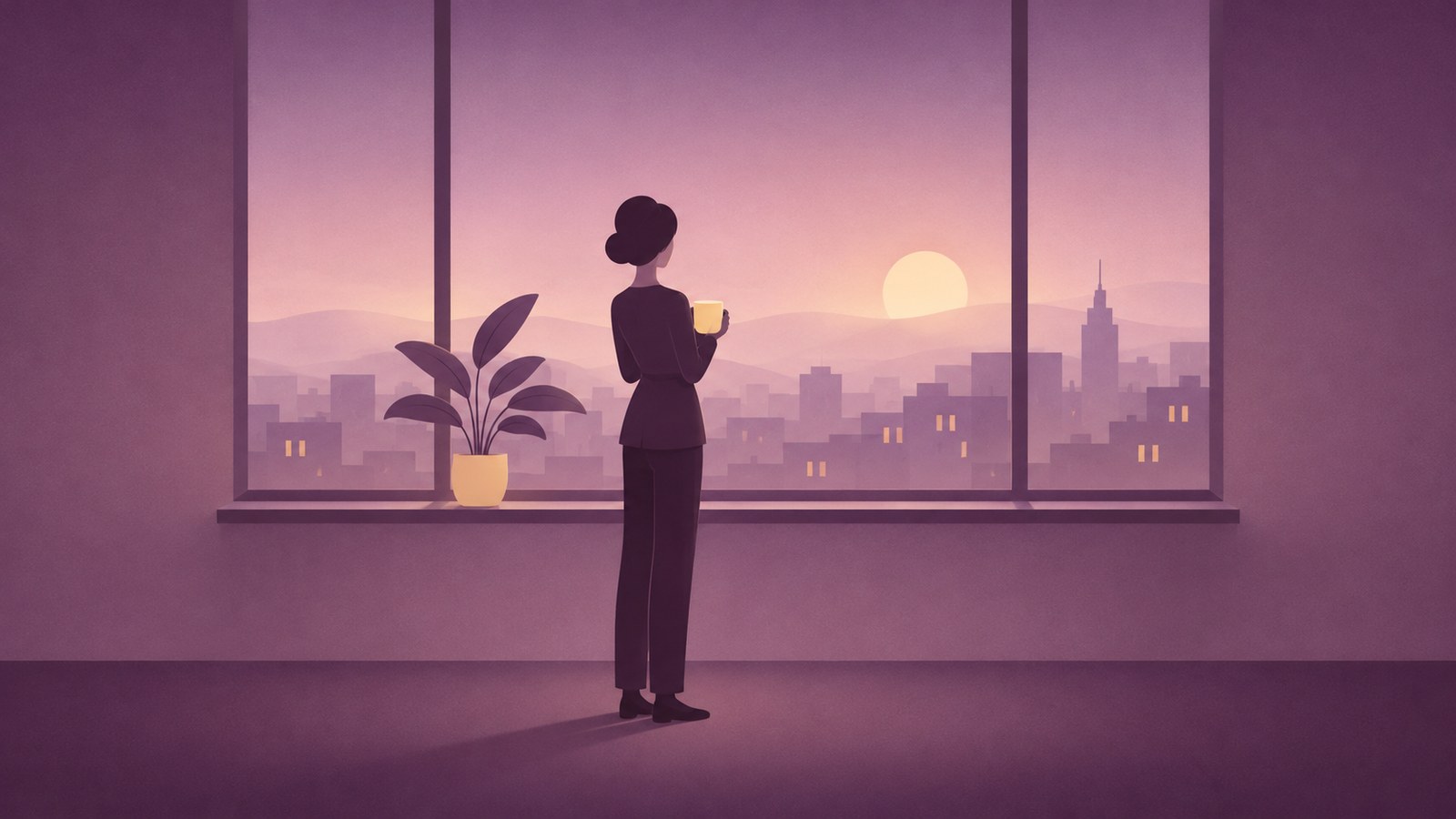
Stand up, take your mug or water glass to the window, and look as far into the distance as you can. Let your eyes rest on a tree, a rooftop, or the sky. Screens keep our eyes focused close for hours, so looking far away is a small relief for them.
Breathe slowly for a minute. If there is a plant on the sill, notice its leaves. If it is dusk, watch the light change. You are not trying to achieve anything; you are just here.
Tip: set a gentle reminder on your calendar for 11 am and 3 pm called “Pause,” so the moment is already booked.
The transition breath
Between meetings or tasks, it is easy to carry the stress of the last one into the next. Before you switch, take one deliberate breath: in for four, out for six. As you exhale, imagine closing a tab in your mind.
If you are walking to another room, use the time to feel your feet on the floor. Nobody needs to know you are doing it.
The lunch break, properly
If you can, eat away from your screen for at least ten minutes. Take a few bites slowly and notice the flavours and textures. Afterwards, step outside for a short walk, even just around the block.
Fresh air and a change of scenery do more for the afternoon slump than another coffee at your desk. If going out is not possible, stand by a window and stretch your arms overhead a few times and take three slow breaths. Small as it is, it still counts as a proper break.
The end-of-day close
At the end of work, take two minutes to wrap up. Write tomorrow’s top three tasks on a sticky note. Close your laptop. Stand, stretch your arms overhead, and take a long breath out.
Saying a quiet “that is enough for today” can help you leave work at work, at least a little more than before.
Start with just one
You do not have to do all of these. Choose the one that feels easiest and try it for a week. Once it becomes familiar, add another if you like. Progress here is gentle and slow, and that is exactly the point.
If you would like to build a calmer routine with a friendly teacher guiding you, why not see how it feels? Your first live class is free, and it is a lovely way to end a busy day.