The alarm goes off, you reach for your phone, and within thirty seconds your mind is already racing through the day. Meanwhile your body, which has been lying still for hours, is still waking up. A short stretch is a kind way to let the two catch up with each other.
This routine takes about ten minutes and needs only a little floor space. I teach versions of it in my classes, and students often say it is the first thing they actually kept doing. Go slowly, and do not worry about getting it perfect.
Before you begin
Drink a glass of water if you like, open a curtain for some daylight, and stand or kneel on a mat or a towel. Wear whatever is comfortable. Your body will be stiffer in the morning than in the evening, so keep every movement smaller and softer than you think you need.
The routine
1. Lying full-body stretch (1 minute)
Before you even get up, lie on your back and reach your arms overhead and your toes away from you. Inhale and lengthen, then exhale and relax. Do it three times, the way a cat does.
2. Knees-to-chest rock (1 minute)
Hug both knees in towards your chest and rock gently from side to side. This is a soothing massage for your lower back.
3. Cat-cow on hands and knees (2 minutes)
Come onto all fours. Inhale as you lift your chest and tailbone, exhale as you round your back. Move at the speed of your breath, around ten slow rounds. Pad your knees with a folded blanket if they feel tender.
4. Child’s pose (1 minute)
Sit back on your heels with knees wide, arms stretching forward, and forehead resting on the floor or a cushion. Take five or six deep breaths into your back.
5. Low lunge (1 minute each side)
Step one foot forward between your hands and lower your back knee down. Gently sink your hips forward until you feel a stretch at the front of the back hip. Breathe, then change sides.
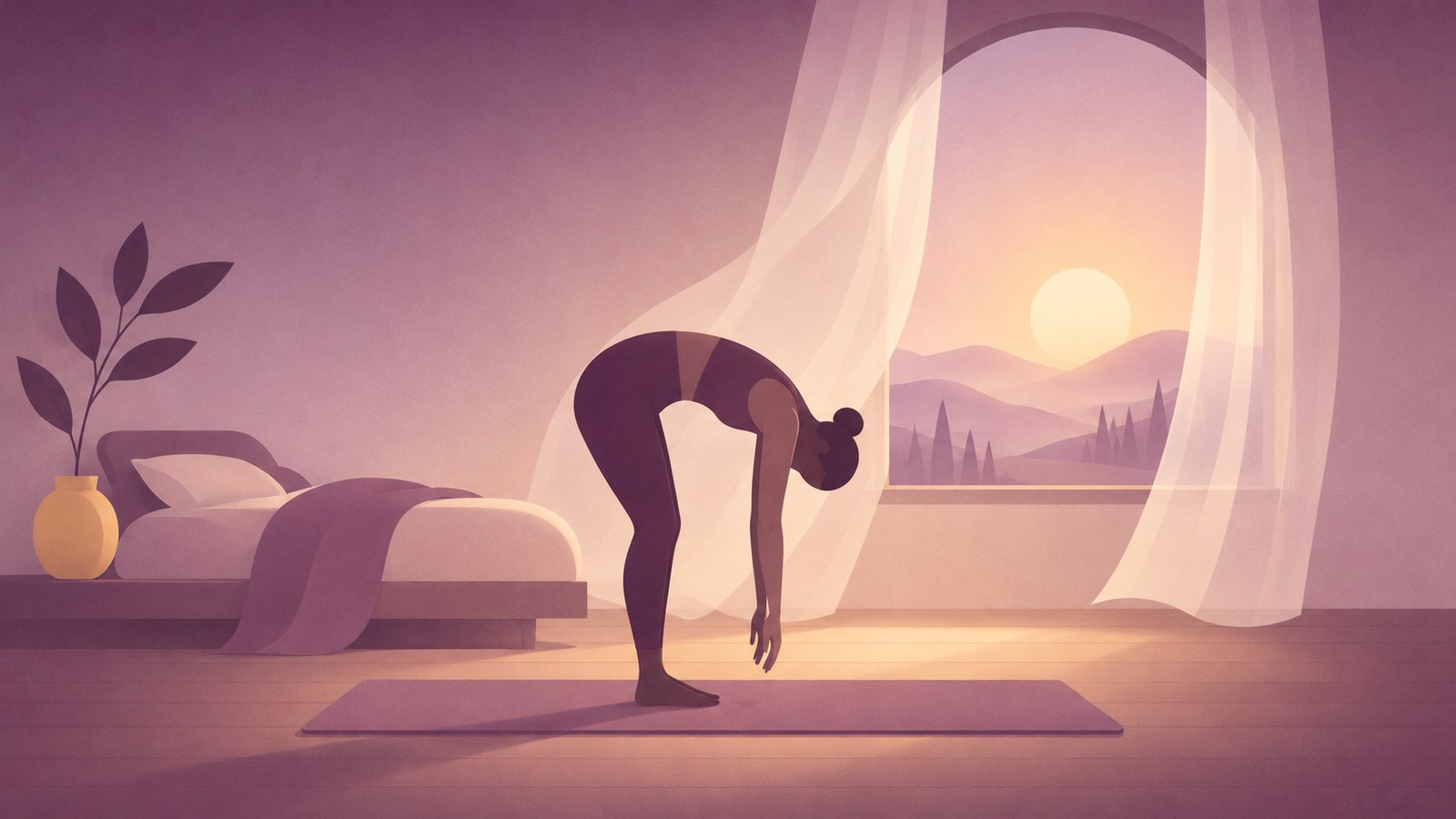
6. Standing forward fold (1 minute)
Stand with feet hip-width apart and fold forward with soft, bent knees. Let your head and arms hang heavy. Nod yes, shake no, and sway a little.
7. Roll up and reach (1 minute)
Slowly roll up one vertebra at a time, head last. Raise your arms overhead, take a big breath in, and sweep them down as you breathe out. Stand for a moment and notice how you feel.
Tip: lay out your mat the night before. If it is already on the floor, you have one less decision to make in the morning.
Make it stick
Most people give up on morning routines because they are too ambitious. Start with just three of the moves for a week. When that feels easy, add another.
- Anchor it: stretch right after you switch off the alarm or before you put the kettle on.
- Be flexible about time: five minutes still counts. So does a slow stretch in the doorway.
- Do not judge stiff days. Some mornings your body is simply slower. That is normal and it is okay.
What you might notice
After a week or two you may find you feel a little looser getting out of bed, or that you start the day with a calmer mood. There are no guarantees, and that is fine. The aim is simply to start the day by checking in with yourself instead of with your inbox.
If something hurts, stop and check in with a professional, especially if you have a back, knee or neck condition.
If you only have three minutes
Some mornings are chaotic, and that is okay. Here is a mini version: lying full-body stretch, five rounds of cat-cow, and one slow standing forward fold. Together they take about three minutes and still give your body a friendly hello.
On slower weekend mornings, you can stay longer in each pose, add a few extra breaths, or finish with a minute of quiet sitting by the window. Let the routine bend to fit your life, not the other way round.
Try keeping a glass of water and a notebook by your mat. After you finish, jot down one word for how you feel. Over a few weeks, those little notes show you how your mornings are changing, and they are pleasant to look back on.
If you would like a teacher guiding you through the first mornings, your first live class is free, and Sandra will happily show you how to ease into movement at your own pace.