Almost everyone who takes up yoga starts with a burst of enthusiasm. Then a busy week arrives, a few sessions slip by, and a quiet voice says, “Well, I’ve fallen off now.” If that sounds familiar, you’re in very good company, and it’s far easier to fix than you think.
Staying consistent isn’t about willpower or perfect schedules. It’s about making your practice small, easy and friendly enough that it survives real life. Here’s how.
Make it smaller than you think
The biggest reason practices fade is that they’re too big. A 60-minute session needs a gap in the day, a clear floor and a good mood. A five-minute one needs almost nothing.
Decide on a minimum version, the least you’d be happy to call a practice. Maybe it’s three cat-cows and a child’s pose. On good days you’ll do more; on terrible days the minimum still keeps the habit alive. And once you’re on the mat, you often carry on for longer anyway.
Anchor it to something you already do
A new habit is far more likely to stick if it follows an existing one. Try one of these:
- After the kettle is on, stretch while it boils.
- After you brush your teeth, take five slow breaths on the mat.
- After you finish work, do a few forward folds before you start dinner.
The old habit becomes a reminder for the new one, so you don’t have to remember or decide.
Make it easy to start
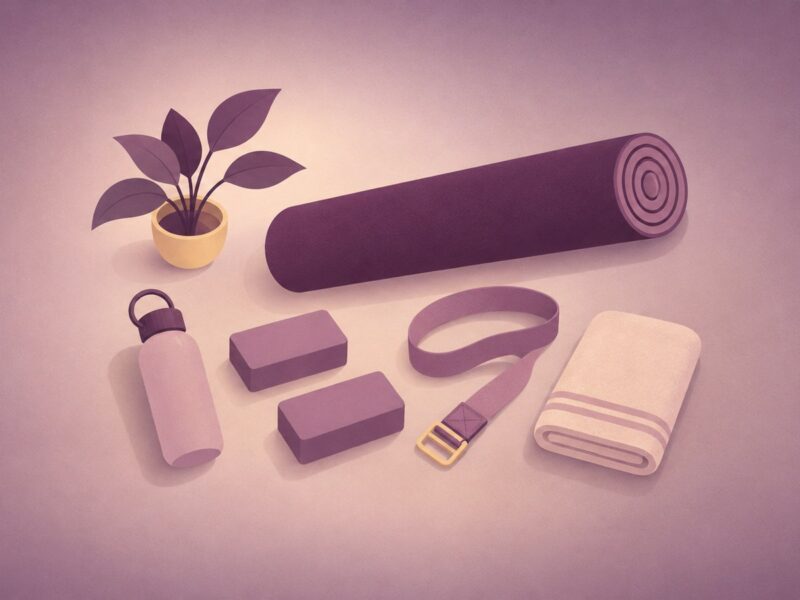
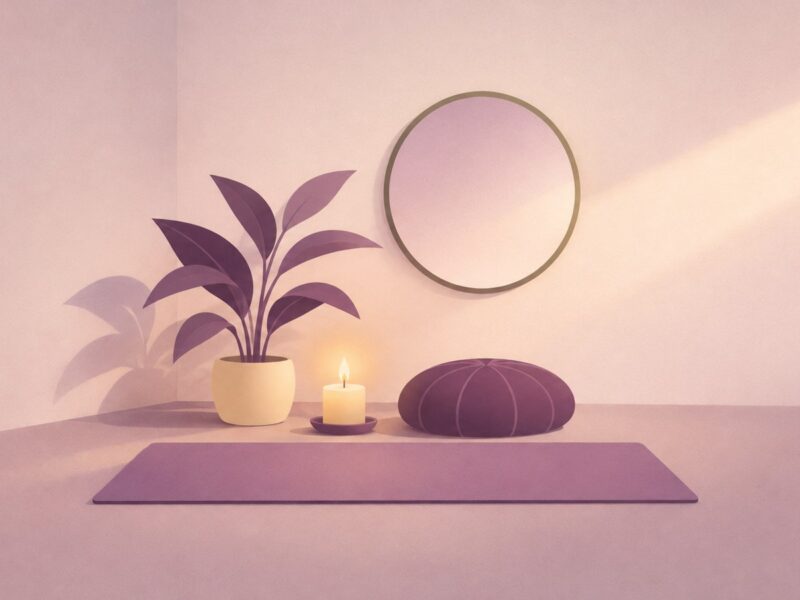
Look at the small frictions between you and your mat. Is it at the back of a cupboard? Is the floor covered in laundry? Leave your mat rolled out in a corner or propped by the sofa. Keep any props nearby. The fewer steps between “I could” and “I am”, the better.
Book it like an appointment
A practice that lives in your head tends to lose out to one that lives in your calendar. Pick two or three regular slots, write them down, and treat them as seriously as any other plan. If you enjoy company, a live class is a wonderful anchor, because someone is expecting you and the time is already set.
Track it, lightly
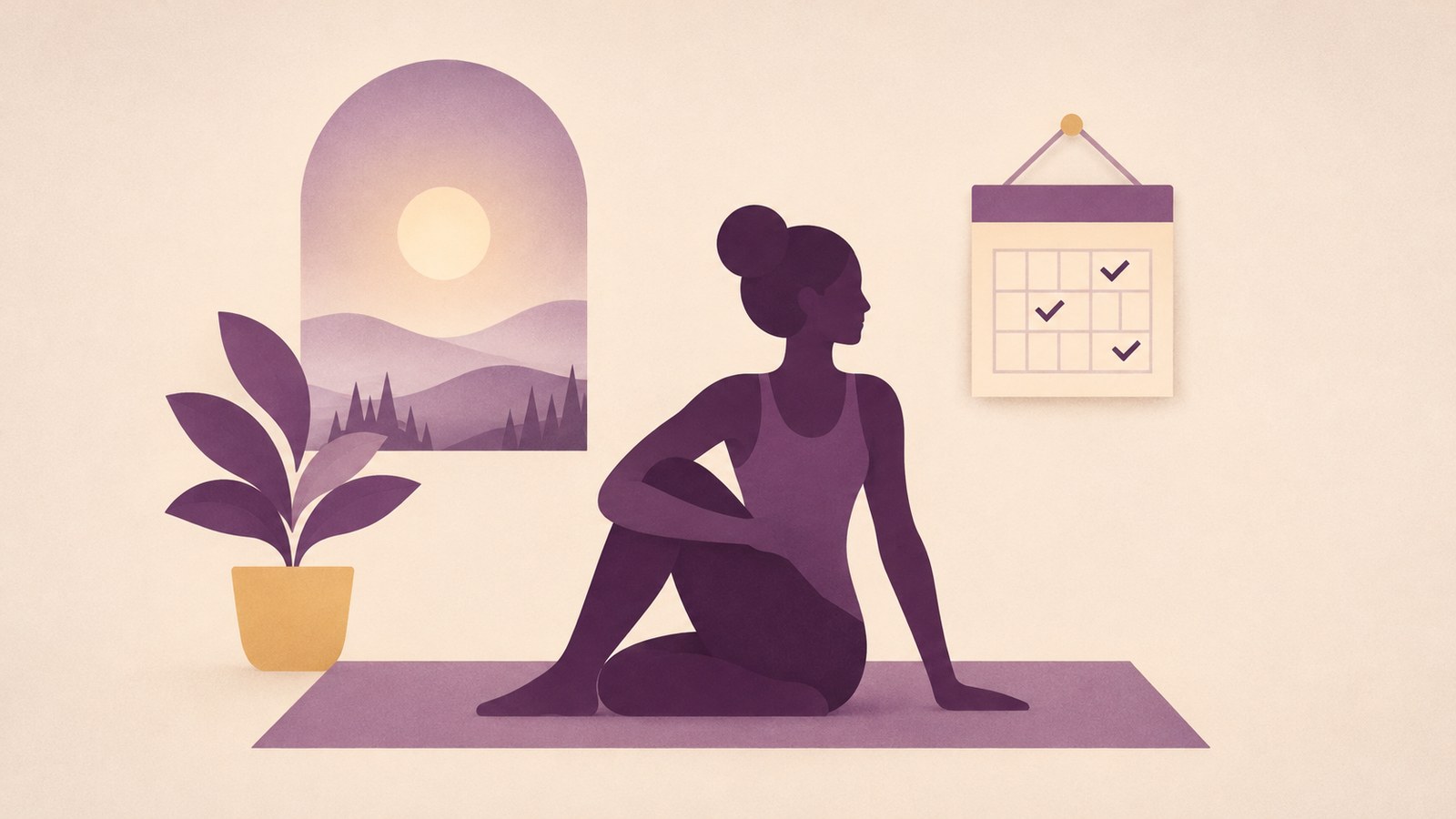
A small wall calendar with a tick for each day you practised can be surprisingly motivating. Seeing a row of ticks feels good. Keep the rules kind though: any amount counts, even two minutes.
And if you miss a day, the golden rule is never to miss twice. One missed day is a pause; two or three in a row is the start of a new habit you didn’t choose. Simply return the next day, with no apology and no catching up.
Match the practice to your energy
Some days you’ll want a vigorous flow, other days a few minutes lying on the floor. Both are yoga. Having a short menu helps:
- Low energy: lie on your back, knees to chest, gentle twist, slow breathing.
- Medium energy: a few rounds of cat-cow, downward dog and a low lunge on each side.
- Good energy: a longer flow or a live class.
Choosing based on how you feel, not on what you think you should do, keeps the practice something you want to come back to.
You’re not trying to build a perfect streak. You’re building a relationship with your own body, and relationships are made of returning.
Notice what you gain
Progress in yoga is quiet. It rarely arrives as a big moment, more as a slow shift in how you sit, stand and breathe.
After each session, take ten seconds to notice how you feel. Looser? Calmer? A little clearer in the head? Those small observations are your best motivators, much more than any rule. Write one word in a notebook if you like.
If something hurts, stop and check in with a professional. Aches from effort are different from pain, and you’re always allowed to rest.
When you’ve been away for a while
Sometimes a holiday, illness or a hectic month means weeks without practice. Please don’t treat that as a reset to zero. Your body remembers more than you think. Start with a short, easy session, move more slowly than before, and let the breath lead.
Ease back in over a week or two rather than trying to pick up where you left off. A gentle return is far more likely to stick than a heroic one, and it’s kinder too.
If you’d like a friendly, regular rhythm to lean on, have a look at the weekly schedule and choose a time that suits you. We’ll be glad to see you on the mat.