Every home has that one drawer. You know the one: batteries, takeaway menus, a single glove, three keys that open nothing. It sits there quietly, and every time you open it, a tiny part of you sighs.
Clutter is rarely about being untidy. It’s usually a pile of small decisions we haven’t made yet. And since each pile quietly asks for a bit of attention, a cluttered space can feel busy even when you’re resting. The kindest way to begin is not with the whole house but with that one drawer.
Why one drawer?
Big declutter projects often stall because they’re exhausting to start. A drawer is small enough to finish in a quarter of an hour, and finishing something gives a little lift. That lift is what carries you to the next drawer, and the next.
It’s also low-risk. Nobody was ever overwhelmed by a drawer. So pick one now, and set a timer for fifteen minutes.
The fifteen-minute drawer method
- Empty it completely onto a table or the floor. Seeing everything at once makes decisions easier.
- Wipe it out. A damp cloth takes a minute and makes the next step feel fresh.
- Make three piles: keep, give away or recycle, and bin.
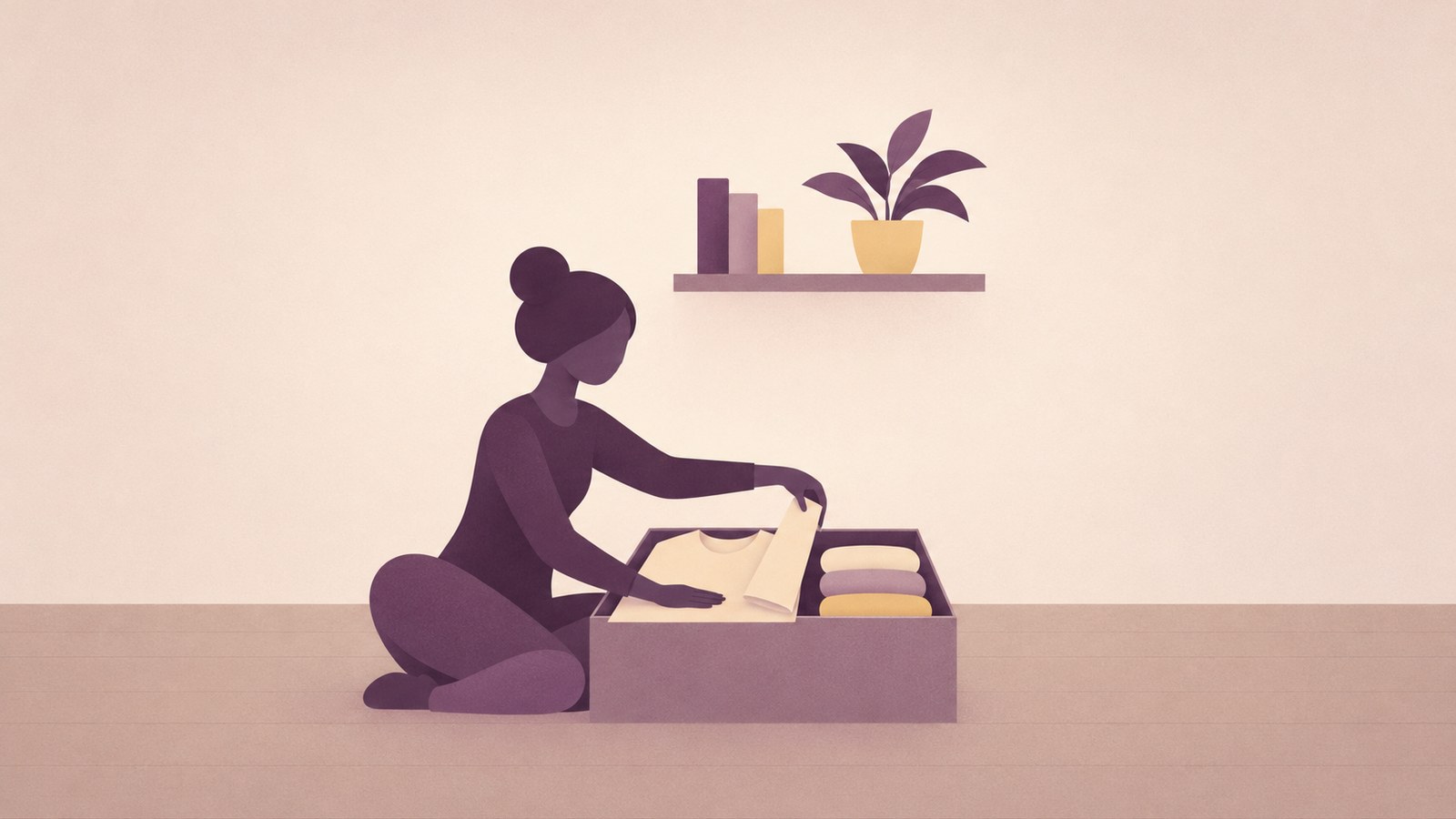
- Return the keepers in neat groups. A few small boxes or an old tray make good dividers.
- Take the other piles away straight away: bin bag out, donation bag by the door.
That last step matters. A bag of things to donate that sits in the hallway for three months is just clutter in a different place.
Questions that make choosing easier
If you’re unsure about an item, try asking one of these:
- Have I used this in the last year?
- Would I buy it again today?
- Does it work, fit and still suit me?
- Is it here because I love it, or because I feel guilty letting it go?
Guilt is a common sticking point. A gift you never use isn’t a debt. You can be grateful for the thought and still pass the object on to someone who will enjoy it.
Keep a “maybe” box
For things you honestly can’t decide about, use a small box labelled with a date three months ahead. Put the maybes inside and close the lid. If you haven’t opened it by that date, you have your answer, and it can go without another look. This takes the pressure off in the moment.
Move slowly through the house
Once your first drawer is done, enjoy it. Open it a few times just to see. Then choose the next small area, perhaps:
- A bedside table
- The shelf where your keys and post land
- One shelf of the bathroom cabinet
- The corner of your wardrobe you never reach
One small area a day, or even one a week, is plenty. Slow progress is still progress, and it’s much easier to keep up.
Aim for “easier to live in”, not “perfect”. Your home is for living, not for photographing.
Notice how it feels
After each little tidy, stand still for a moment. Take three slow breaths and look at the space. Notice whether your shoulders have dropped. This small pause teaches your mind to link tidying with calm, which makes the next session easier to begin.
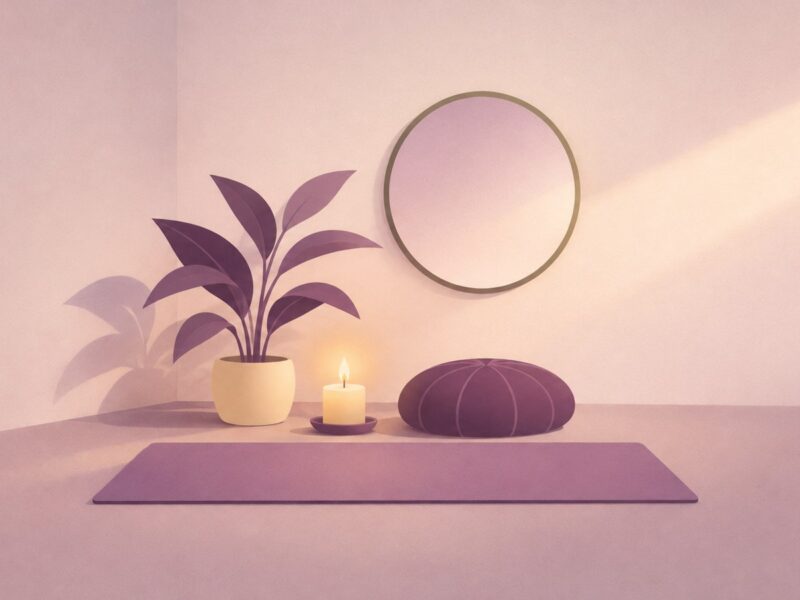
If you like, create one clear surface that you protect: a bedside table with just a lamp and a book, or a corner of the floor kept free for stretching. A single clear space gives your eyes somewhere to rest. If movement is the plan, our guide to a cosy home practice corner shows how little room you need.
If you have a more emotional pile, such as keepsakes or a loved one’s belongings, go gently and take your time. There’s no deadline, and it’s fine to ask a friend to sit with you.
Keep it from creeping back
A few small habits stop clutter returning. Give every item a home, so putting things away is a thirty-second job. When something new comes in, let something old go out. And once a week, spend five minutes returning stray items to their places while a song plays.
None of this needs to be strict. The goal is a home that feels easy, where you can find what you need and rest your eyes without effort.
When your space feels a little lighter, you may find you’d like to use it for movement. Your first live class is free, and all you’ll need is a little clear floor and a comfortable mat.