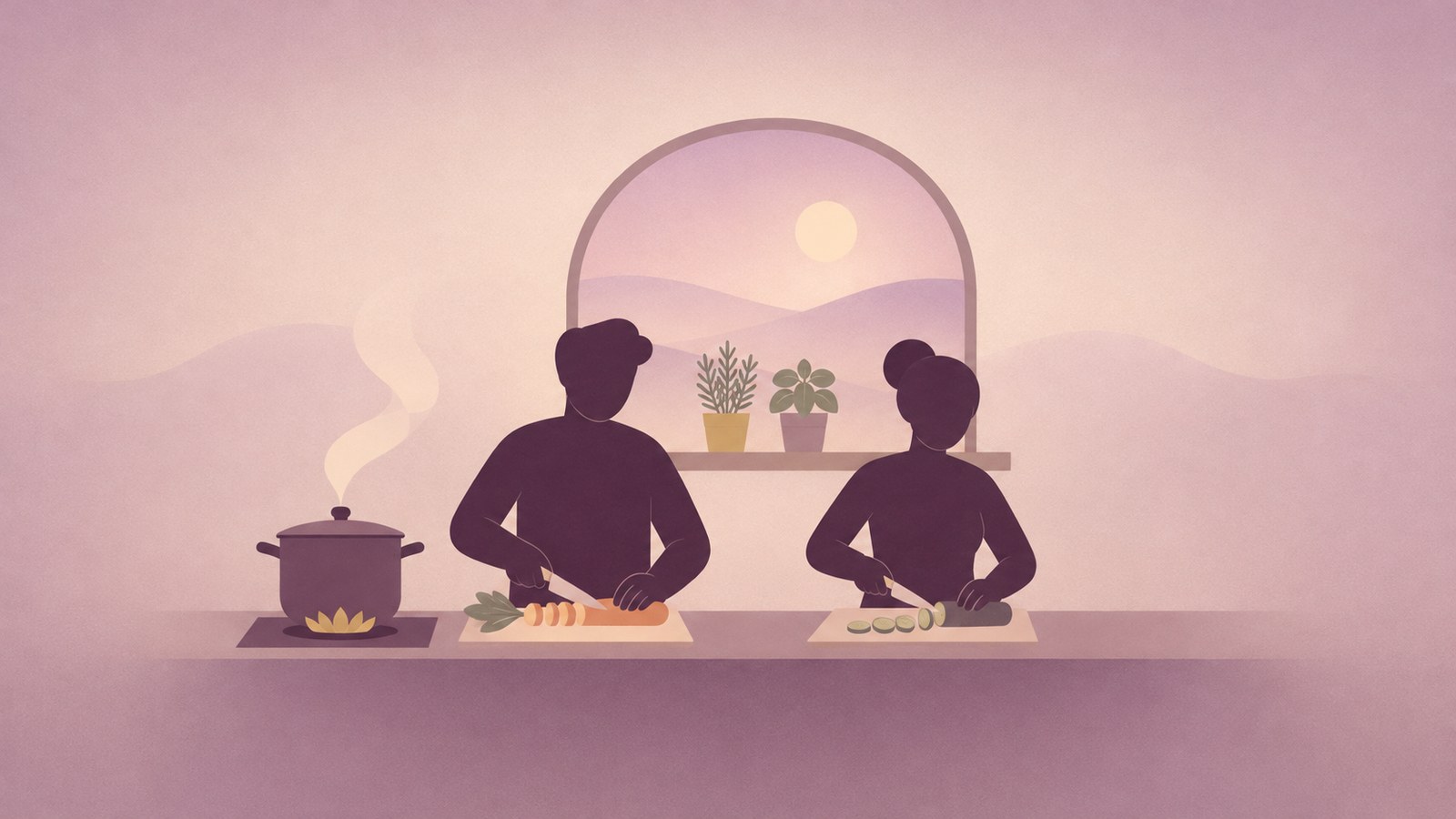
Picture a kitchen where nobody is rushing. Music is playing, something is simmering, and two people are chatting while they chop. It sounds like a film scene, but it can be an ordinary Wednesday night with a little planning.
Cooking together is one of the easiest ways to spend time with someone you care about. Your hands are busy, your phone is in another room, and conversation comes more easily. It does not need to be fancy to feel good.
Keep the meal simple
The point is the company, not a restaurant-level dinner. Pick something with a few steps and forgiving ingredients, such as a big pot of pasta with roasted vegetables, a stir-fry, tacos, or a simple soup with bread. If it turns out a bit lopsided, nobody minds.
Choose a meal that has several small jobs, so there is something for everyone: washing, chopping, stirring, grating, setting the table.
Share the jobs, not the pressure
If one person usually runs the kitchen, it can take a moment to let go. Try dividing the work like this:
- One leads, one assists. Swap roles each week.
- Split by task. One person handles vegetables, the other the sauce.
- Everyone has a “signature” job. Perhaps you are the one who always makes the salad dressing.
Try to resist correcting how someone chops an onion. Unless it is a safety matter, there are many right ways to do it. In my classes I often say the same about poses: your version is allowed to look different.
Make the atmosphere part of it
A few small touches turn cooking from a chore into an evening:
- Put on music you both like.
- Pour a drink, a glass of something or a mug of herbal tea.
- Dim the big light and switch on a lamp.
- Park phones away from the counter for the half hour you cook.
Fresh herbs on the windowsill are a lovely extra. Pinching a bit of basil or mint to finish the dish is a tiny moment of pleasure that anyone can share.
Cooking with kids or friends
Children often love being given real jobs: tearing herbs, stirring, pressing the button on the blender (with you nearby). Allow extra time and a bit of mess. With friends, try a “bring one ingredient” evening, where everyone adds something and you build the meal as you go.
Tip: choose one evening a week as your “cook together” night. A regular slot is easier to keep than a vague intention.
Sit down and enjoy it
Finish the experience by eating at the table, even if it is just the two of you. Light a candle if you like. Take a moment before the first bite to say thank you for the meal and for each other. If you enjoy slowing down at the table, you might like our tips on mindful eating.
And share the cleaning up too. Often the best chats happen over the dishes.
If you live alone
Cooking together does not have to mean in the same room. You can video-call a friend and cook the same recipe at the same time, or invite a neighbour for a simple soup. Even cooking for yourself can feel like company if you play a podcast or favourite playlist and take your time.
Ideas to keep it fresh
If your cooking nights start to feel samey, add a little playfulness. Pick a cuisine to explore each month, or let each person choose a recipe in turn. Try making something from scratch that you usually buy, such as pizza dough, dumplings or fresh pasta. Pizza night is especially good for sharing, because everyone can top their own.
You can also set a gentle theme: “everything in one pan”, “meals under thirty minutes” or “use up what is in the fridge”. Small limits often spark more creativity than total freedom.
When it gets messy
Something will probably burn, spill or taste a little odd at some point. Laugh about it. A kitchen shared in good humour makes better memories than a flawless meal cooked in silence, and there is always toast as a backup plan.
A few minutes of tidying as you go also keeps the end of the evening light. Wipe the counter while the pasta boils, and rinse each bowl as you finish with it. Then, when you sit down to eat, the kitchen is not waiting to be dealt with, and you can both enjoy a quiet moment together. Little habits like this make the whole evening feel calmer, and they make you more likely to do it again next week.
If you enjoy doing things side by side with others, a live class can feel similar. Your first live class is free, and you can join from your own living room.